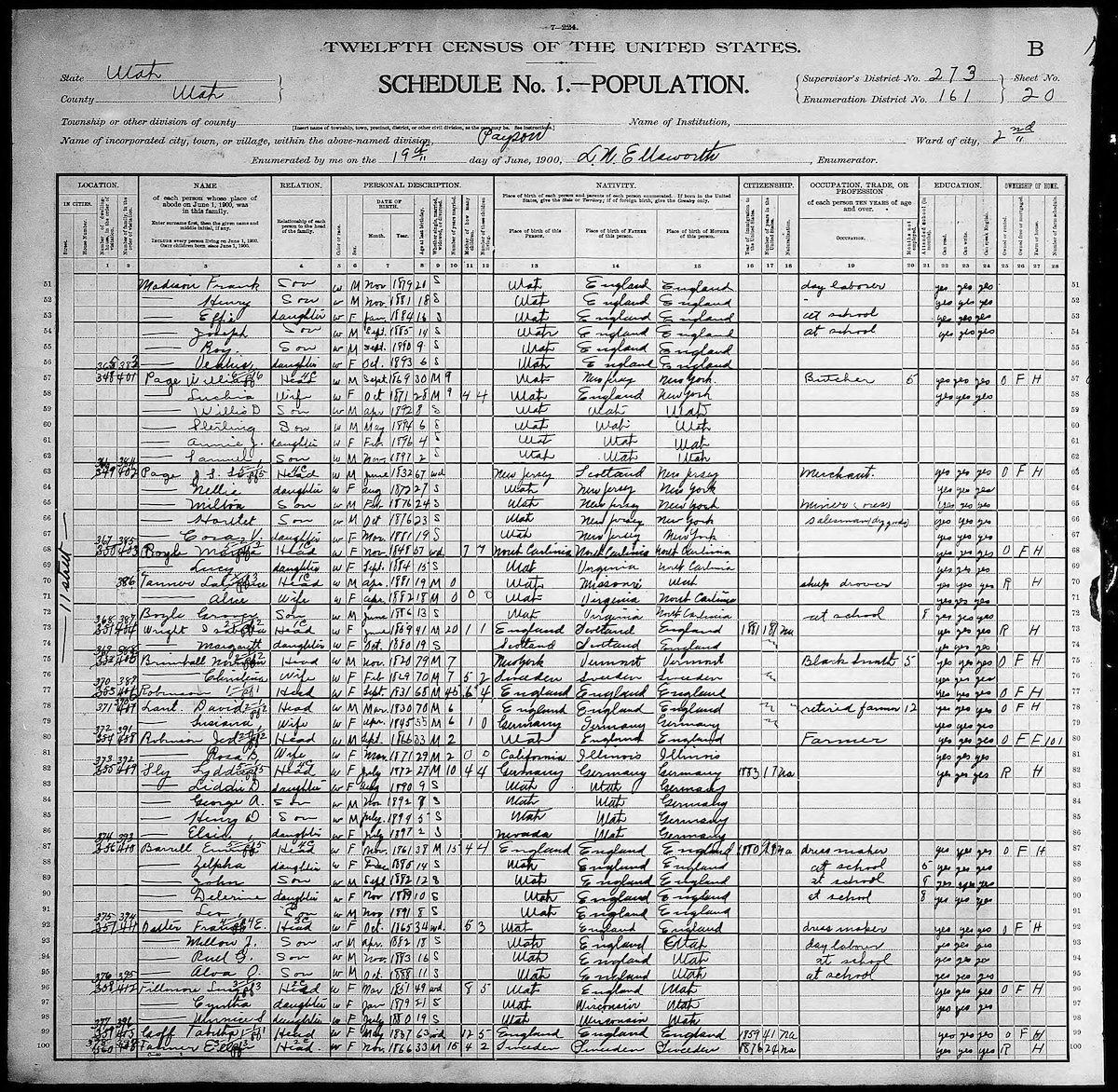
Census records for the USA started in 1790 and have been taken every 10 years since then. Due to a fire in the Commerce Building in 1921, many of the 1890 Census records were badly damaged. The last US Census was released in 1950, with the 1960 US Census due to be released in 2032. Each Census is released 72 years after the date taken.
Census records up to 1850 only listed the Head of Household. The other members were essentially "place markers” (or tick marks) as to whether the dependents were either male or female, and in what age range they fell.
However, the 1850 Census started listing family members, and then by 1880 the family relationships as well. As the years progressed, different questions were asked that helped broaden the picture of the family. Census records are a great source of information on family members. Don’t forget to review ALL the information on the Census.
New children will be added to the next census. Don't forget that there were children that were born and died between census decades and so their names wouldn't be noted on census records.
What Information Do They Hold?
The occupations of the head of household or older family members are listed.
The birth places of their parents are also listed. This can help where there are two families with very similar names to identify which one is really your family.
The street addresses are listed. Can you find their home using Google Maps?
Depending on the Census year, # of living children and # of of deceased children.
Click to Enlarge
Census records are also a great way to find additional family members. If you look at several pages before and after the census page showing your ancestors, you may find other family relatives "down the street", as families often moved and stayed together.
How Accurate Are They?
Accuracy of the Census is based on various factors like literacy of the enumerators (census takers), handwriting clarity, spelling ability, literacy of the family members, who was home at the time, maybe the neighbor provided the information because the family wasn’t home, etc. Indexers will often make mistakes as they try to read odd names or poor handwriting.
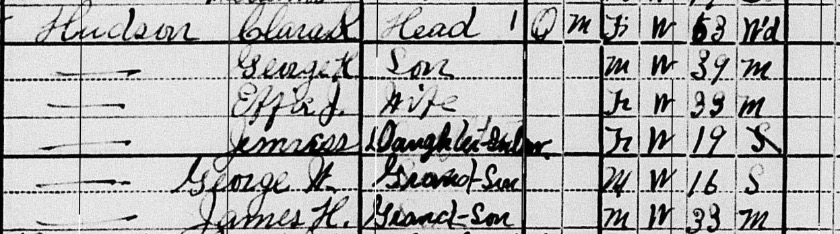
Here is an example of a variety of mistakes that the enumerator and indexers made on this 1920 Census.
Clara K Hudson was now 63 yrs and widowed. She is the Head of Household. Let’s look at the entries listed as entered by the enumerator.
One of Clara’s sons, George (39 yrs), and his wife Effie are listed next. They are listed correctly.
What looked like Jemress to the indexer is actually Jenness. She is listed as a “daughter in law”, but is actually Clara’s youngest daughter.
George (16 yrs) is actually Clara’s grandson.
James Hudson (33 yrs), is NOT a grandson, but Clara’s actual son.
Typically, there are not so many errors, but hopefully you can see the importance of comparing census records side by side. This helps to see the consistencies and inconsistencies.
Spelling of last names also changed, such as Meier from Germany to Meyers once in the USA. Even amongst family members, names may have been spelled differently. As an example, Clindenin for some family members, Clendinin for others, and Clendenen for others. Remember that rules for spelling (phonics, etc) didn’t really start until the early 1900’s. As another example, the “Fausett” family is often recorded in different ways like Faussett, Fausett, Faucett, Faucet, etc. Names like McAninch with a strong Irish brogue may have been difficult to understand and were heard by the enumerator as McQunich in the 1900 Census. These types of name spelling difference will require you to be creative as you search for “names”.
How Can I Keep Track of Each Census Information
Be sure to find each census record for the specific family you are researching. A "Census Tracking Form" will help you keep track of the information from each census you find. View an example of how you might use that form below. You may find new children or other family members, like a grandparent, a sister-in-law, or others in the census record. A child may have died in the years before the next census. There is a lot of information to be found on a census record!